Showing posts with label Chemistry. Show all posts

Saturday, 6 August 2016

Refuelling with carbon dioxide

What if we could turn CO2 into fuel? We would solve the global warming problem and the fuel problem. Scientists from the University of Toronto have done just that.

It’s too hot!
Carbon dioxide (CO2), water vapour and methane are the three main gases responsible for the enhanced greenhouse effect which causes the climate to change. CO2 is responsible for between nine and twenty-six percent of the greenhouse effect. Therefore, if we can decrease the concentration of CO2 in the atmosphere, we would be able to reduce the negative consequences of the enhanced greenhouse effect and global warming. And the good news is: we can do that now! With the new technology, developed by Min Liu and Yuanjie Pang from the University of Toronto, we can change excess CO2 into the building blocks of fuels. But, it’s important that we only convert the excess CO2, and that we still leave a little in our atmosphere because CO2 is super important for us and all life on earth. Without CO2 and the greenhouse effect, the earth’s average temperature would be a chilling -18°C (-0.4°F) instead of a pleasant 15°C (59°F). But how does this new technology work?


But the CO2 has to want to change
Min Liu and Yuanjie Pang created nanoneedles, with tips ten thousand times thinner than hair. These needles conduct electricity, and this electricity attracts CO2. This is necessary because the concentration of CO2 in the air is still pretty low. Only four out of every 10000 air particles are CO2 molecules. Another problem we face when we try to alter CO2 is that it doesn’t want to change. It’s an inert molecule, which means that it takes a lot of effort to make it react with another substance and change. But, when you can bring a lot of CO2 and energy together, which the scientists in Toronto did with their newly developed device, this greenhouse gas will react more readily. Min Liu and Yuanjie Pang managed to change CO2 into carbon monoxide (CO), which is actually a poisonous gas, but also a building block of fuel.

Two flies with one hit
That’s another advantage of their invention, it can not only remove CO2 from our atmosphere, it can also create a substance which can be used to create all kinds of fuels and other useful chemicals. Pang describes their invention as “we're killing two birds with one stone” to Science Daily. Their invention can also provide us with a solution for the growing global energy problem and oil shortage. This could be done since we would not rely as heavily on oil or any fossil fuels if we can make fuels from CO2 on a large scale. That’s the main challenge for now, to make Liu and Pang’s invention truly useful we have to apply it on a really large scale. And that’s a long way of research away.


Click here to read more about chemistry.

Sources:

Thursday, 4 August 2016

Salty oxygen surprises scientists

Studying how the atmosphere was millions of years ago can tell us a lot about early life on earth. But that air is long gone. Nigel Blamey and his team have found a salty solution.

Air tight enclosed in salt
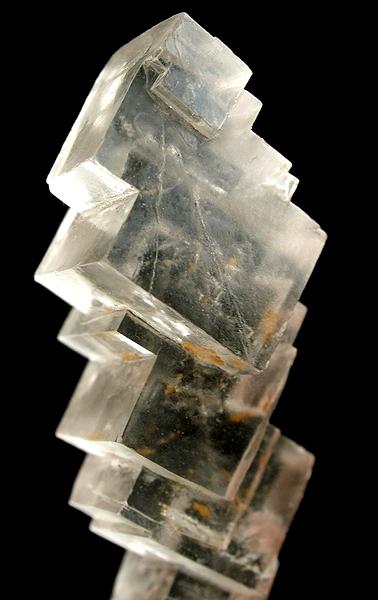
Blamey and his team have closely analysed ancient salt crystals. Salt crystals have tiny pockets of air in them and Blamey managed to extract these pockets out of the crystals in order to analyse them. They drilled up 815-million-year-old salt crystals from Australia’s soil and with a special device, they were able to crush the crystals and then capture the old gases that come out of the crystals. They then analysed those gases and made a really interesting discovery.

That’s weird…
Blamey and his team discovered that 815 million years ago, there was twice as much oxygen in the air as we used to think. Scientists used to think that there was only around 5 percent oxygen in the atmosphere that long ago. They also used to think that it was the reason for the lack of any complex life back then. The first complex life arose between 100 and 200 million years later, in a period called the Cambrian explosion. This explosion of complex life marked the beginning of the geological period called the Cambrian. During the Cambrian explosion all major ‘branches’ of the tree of life evolved. For a long time, scientists thought that complex life was made possible by the sudden increase of oxygen in the atmosphere. But now, Nigel Blamey and his team have discovered that the oxygen levels were already high enough for such an explosion millions of years earlier. So the Cambrian explosion must have had another reason.

No idea
Well, scientists haven’t found a reason yet. This discovery is so recent that scientists haven’t been able to adapt their theories yet. But Blamey and his team have found other interesting uses for their new machine that can extract gases from ancient salt crystals. For starters, they can analyse different salt crystals from other time periods. Through this, we can learn more about the history of our atmosphere. And with these future experiments, we may also be able to predict the future of our atmosphere. This would be very helpful to scientists doing research about climate change. But Nigel Blamey and his team also see another use for their new technique which is out of this world.

Maybe check out Mars too
Blamey and his team also see their technique being used on Mars. Since you can also find salt crystals that contain air pockets there, we could learn a lot more about Mars’s ancient atmosphere. This could be done by equipping future Mars rovers with the device Blamey and his team made. Analysing the planet’s salt crystals could prove that Mars’ atmosphere contained a lot of oxygen in the distant past, which could help us with finding out if life ever arose on Mars, or if it was possible. This shows that one invention can teach us about both terrestrial and extra-terrestrial life. 

Click here to read more about chemistry.
Click here to read more about geograpgy.
Click here to read more about astronomy.

Sources:
http://pop.h-cdn.co/assets/16/07/1600x800/landscape-1455662627-mars-surface-web.jpg

Saturday, 2 July 2016

Closing the hole

The ozone hole poses a threat to, among others, the health of people in especially Australia. As UV light doesn’t get blocked out anymore. Fortunately, the hole seems to be closing now.

Your fridge is evil
the ozone hole
The main cause of the ozone hole are chemicals called CFCs. These chemicals were used in almost everything in the seventies; spray cans, refrigerators, Styrofoam and cleaning products. The reason for this is that CFCs don’t react easily with other chemicals. Which is really useful in, for instance, deodorant, as they won’t react with it make it smell like rotten eggs, for example. The problem however is that CFCs do react with ozone, the chemical in our atmosphere that keeps out the UV-rays and keeps us all nice and safe on earth. Without ozone, life on earth would be impossible. So this great amount of CFCs in our atmosphere have caused a ‘hole’ in the ozone layer to form above Antarctica every Australian spring. Well, not really a proper hole, it’s more of a local decrease in the concentration of ozone. As soon as scientists discovered this consequence, CFCs were forbidden, although there has always been doubt that this rule, which is called the Montreal Protocol, would have any effect. Susan Solomon and her team have found out that the rule has worked and the ozone hole is in fact closing.

Save the ozone
Although the ozone hole grew last year because of a couple of volcanic eruptions, since volcanoes can release chemicals that react with ozone too, scientists believe that the ozone hole is really shrinking and the Montreal Protocol really works. Susan Solomon and her team have studied the ozone hole with weather balloons and satellites and they analysed the amounts of CFCs and volcanic chemicals that are still floating around in the atmosphere above Antarctica. From this, the scientists conclude that the ozone hole is really shrinking.

Bye, bye skin cancer
This means that the high amounts of UV-radiation in Australia and on Antarctica will decrease. And since too much UV-radiation causes sunburn and skin cancer, this is really good news for the people living in Australia. The consequences of the ozone hole weren’t that severe on Antarctica, since not many people live there and not much sunlight, and with that not much UV-light reaches the continent. But it’s also really good news for the rest of the world, because this discovery proves that we can actually revert the harm we do to the environment with rules and laws, in this case with the Montreal Protocol. Maybe we can reverse the enhanced greenhouse effect too!

Click here to read more chemistry posts.

Sources:          

Monday, 20 June 2016

Fuel your car with trash

Excess garbage is a big problem in the western world, same for the looming fuel shortage. Chinese scientists have found a way to turn garbage into fuel, with catalysts.

Lowering the mountain
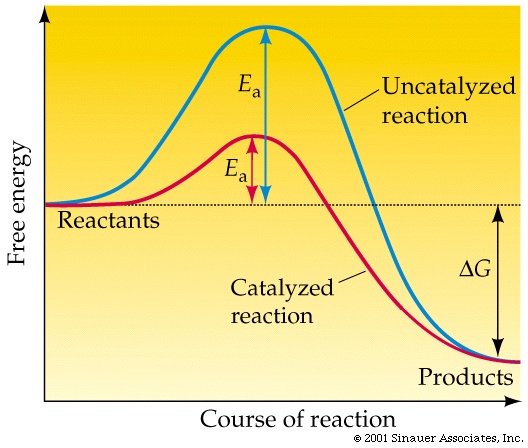
Catalysts are special substances that can speed up chemical reactions. They do this by lowering the amount of energy that a reaction needs to happen. If the reaction needs less energy, it takes less time to get all that energy together. It’s a bit like climbing a mountain, which takes a long time. But when you only need to climb a lower mountain, it goes faster. It’s the same for the reaction, which also goes faster with a catalyst and a lower energy mountain. But the really convenient thing about them is that they don’t get used up in these reactions, so you can use them multiple times. Because of this, catalysts are everywhere, even in your own body, where they help with digesting your food and make your muscles able to move, to name only a few things.


Sawing the plastic
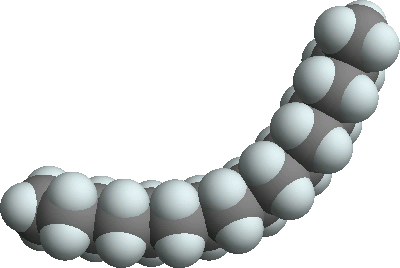
Plastics are made of very long chains of carbon and hydrogen atoms. While most fuels are composed of short chains of those same carbon and hydrogen atoms. If you want to make fuel from plastics, that’s simple, isn’t it? Just cut the chain into pieces. Well, the atoms are actually very tightly connected, so it isn’t that easy to cut the chains. It’s a bit like trying to break a piece of wood in half with only pulling. But this is where the catalyst comes in. This can make it easier to cut the chains, like you suddenly have a saw to cut the piece of wood in half. But with this catalyst, or chemical saw, you can cut the long chain into shorter pieces. And these shorter pieces have the ideal length for diesel fuel.

A diesel molecule
A plasic molecule, as you can see, 
they're made of the same atoms.


Too good to be true, for now
But there are still a few problems, however. For example, the chemical saw goes dull quite quickly, or the catalyst wears down pretty fast, making it useless. This wouldn’t be a problem if the catalyst were cheap, but it is quite expensive. On top of that, the reactions are still pretty slow, taking longer than a day. This makes the catalyst not really useful economically yet, but the team of Chinese scientists are working on solving these problems. And maybe within a few years, you’ll have a car running on garbage bags.

Click here to read more chemistry posts.

Sources:
http://us.123rf.com/450wm/molekuul/molekuul1310/molekuul131000109/23255421-polypropylene-polypropene-pp-plastic-chemical-structure-atoms-are-represented-as-spheres-with-conven.jpg?ver=6


Saturday, 18 June 2016

Sixties’ pesticide still harms orcas

Scientists thought that a dangerous chemical, that was used in the 60s in among others pesticides and plastics, was no longer harming the sea life. But recent studies have made clear that they still do.

Dangerous wonder chemicals
The dangerous chemicals are so-called polychlorinated biphenyls. These chemicals don’t easily break down or degrade, making them very useful in the chemical industry. This is also the reason they were widely used in the 60s, until they turned out to be really dangerous. Polychlorinated biphenyls can cause rashes, liver damage and cancer. When this was discovered, the chemicals were quickly forbidden, and it seemed that the biphenyls disappeared quickly from the oceans. But the amount of biphenyls in the oceans can still cause harm to sea life. Because the chemicals don’t easily break down, the amount of these chemicals has stopped decreasing. Scientists are trying to find a way to get rid of the excess polychlorinated biphenyls anyway.

Poison accumulates in orcas
The polychlorinated biphenyls especially affects the sea animals that are high in the food chain. The explanation for this is that animals can’t digest the biphenyls. So, when a small fish eats plankton that has the chemicals in it, the biphenyls end up in the flesh of the fish. When that small fish then gets eaten by a larger fish, like a mackerel, that fish also eats all the chemicals from all the plankton that the smaller fish ate. And the mackerel can’t digest it either. Then, an even larger fish, like a tuna, eats the mackerel. And the tuna also eats all the biphenyls eaten by all the mackerels it ate. So the amount of polychlorinated biphenyls in the food increases if you go higher up the food chain. For the animal at the top of the food chain, for example a shark or an orca, that amount can be so high that the shark or orca dies.

Remove before 2028
With new studies, scientists hope to find out how the polychlorinated biphenyls move through the oceans. If they know this, they can predict where sea life will be most affected by the chemicals, and where they can try to remove the biphenyls from the oceans best. With this new knowledge, scientists hope to significantly reduce the amount of polychlorinated biphenyls in the oceans by 2028, which will benefit both sea life and people alike.

Click here to read more biology posts.
Click here to read more chemistry posts.

Sources:

Monday, 13 June 2016

Carbon dioxide caught in stone

Carbon dioxide is one of the main causes of climate change. Researches from Iceland have found a new way to story this gas so it can’t harm the climate; by turning it into rock.

Turning the earth into a greenhouse
Carbon dioxide creates, together with other gasses like methane and water vapour, an isolating layer around the earth. The layer of gas lets the sunlight through when it comes to the earth, but when it bounces of the earth again, it reflects the light back to the surface. In the same way as a greenhouse keeps the plants inside it warm, and that’s way this effect of reflecting back the sunlight is also called the greenhouse effect. But the greenhouse effect is definitely not all bad. Without this isolating layer around the earth, the average temperature on earth would be a cold -18 degrees Celsius, compared to the comfortable 15 degrees Celsius that we have with the greenhouse effect. Because all the water on earth would freeze at -18 degrees Celsius, life would not exist. The effect is, however, getting a little bit out of hand, which can cause more droughts, a rising sea level and more flooding, but also more extreme weather and less ice and snow. This is harmful for all life on earth.

Set in stone
Still liquid basaltic rock
But Juerg Matter and his team have found a way to store the excess carbon dioxide, so it doesn’t end up in the atmosphere. They have injected the carbon dioxide that a local factory in Iceland formed into large pieces of basaltic rock, a black, volcanic kind of stone. And 95 percent of the injected carbon dioxide stayed inside the rock. But that’s not all, scientists experimented with store the greenhouse gas in rocks before, but they always used sandstone, which acts a little like a sponge. When you inject the carbon dioxide into it, it stays there, but when the rock breaks, the carbon dioxide is released into the atmosphere again, because the little holes in the stone, that contained the gas, are now exposed to the open air. But with basaltic rock, it’s completely different. The carbon dioxide actually froms chemical bonds with the rock, making it almost impossible for the gas to escape. This method is therefore way more durable.

Good news for Spain and the US
This new method is particulary useful for countries that have a lot of basaltic rock in their soil, like Spain and the United States. They should be able to store most carbon dioxide that they produce in the rocks, because this new method, which is relatively simple, can be used on a larger scale too. Countries that don’t have much basalt in their soil could store their carbon dioxide in basaltic rocks somewhere else, but the CO2 that would produce, will easily outweigh the advantages of storing the greenhouse gas in the rocks. So they have to find other methods of dealing with their CO2.

Click here to read more geography posts.
Click here to read more chemistry posts.

Sources: